
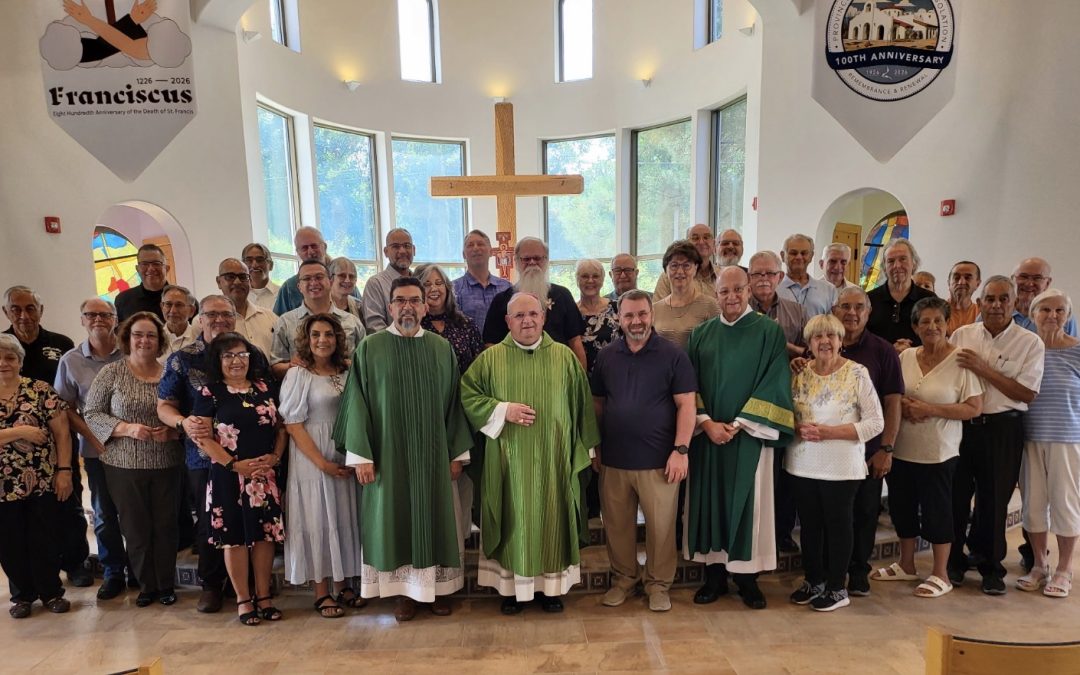
Excerpts from the homily of Bishop Peter at the Closing Mass with the Deacons of the diocese and their wives during the 2026 Deacons’ Retreat:
“During these days, we began not with what a deacon does or ought to do, but with who Christ is.”
From the parable of the wheat and weeds, he draws the central warning against a zeal that outruns mercy: “The servant in the Kingdom needs more than zeal; he needs the heart of the Master. That heart is revealed in Christ… At the Last Supper, Jesus did not offer the Twelve a theory of service. He rose from the table, laid aside His garments, knelt, and washed their feet. The Lord placed Himself at the lowest point in the room so that no one there would be beneath His love.”
The servant-identity of the deacon is not part-time, he told them: “Your identity is not switched on when you proclaim the Gospel or assist at the altar and switched off when the liturgy ends. It accompanies you into the workplace, the hospital and the prison, the family kitchen and the difficult meeting, the public ministry and the hidden hour when no one notices what you have given.” It must stay rooted in its source: “Separated from Christ, service can become activism, control, or the search for approval. Received from Christ, service becomes the communication of a gift already given.”
The whole of the deacon’s life is bound together: “The Word without charity becomes cold; charity without the Word loses its horizon; altar service without a life poured out becomes ceremonial. United, they make the deacon what Benedict XVI called a servant of the Truth and a bearer of joy.” This fruitfulness is usually hidden—“The Kingdom often enters through what is hidden, faithful, and persevering”—and it reaches into the home: “Your wife is not an accessory to your ministry, and your family is not simply where you return after completing the ‘real’ work of the Church. Your home is often the first school of self-gift, listening, forgiveness, and fidelity.”
The bishop located all of it in grace rather than willpower: “The Spirit comes to the aid of our weakness. The Spirit does not wait at a distance until weakness has disappeared. He enters it… Christian perseverance is not stubbornness; it is the courage to remain available to grace.”